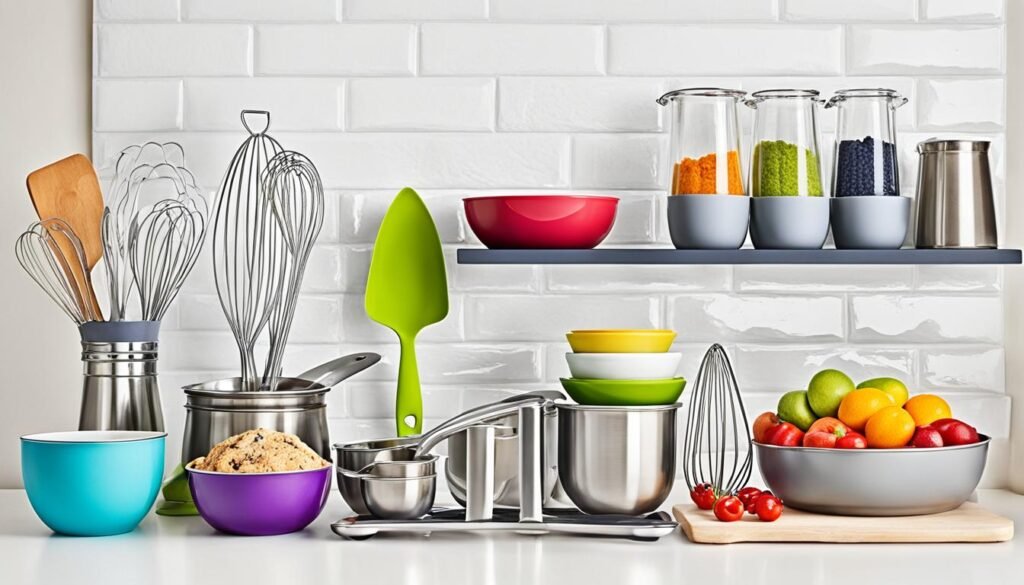
How to Properly Classify Kitchen Items

Classify Kitchen Items

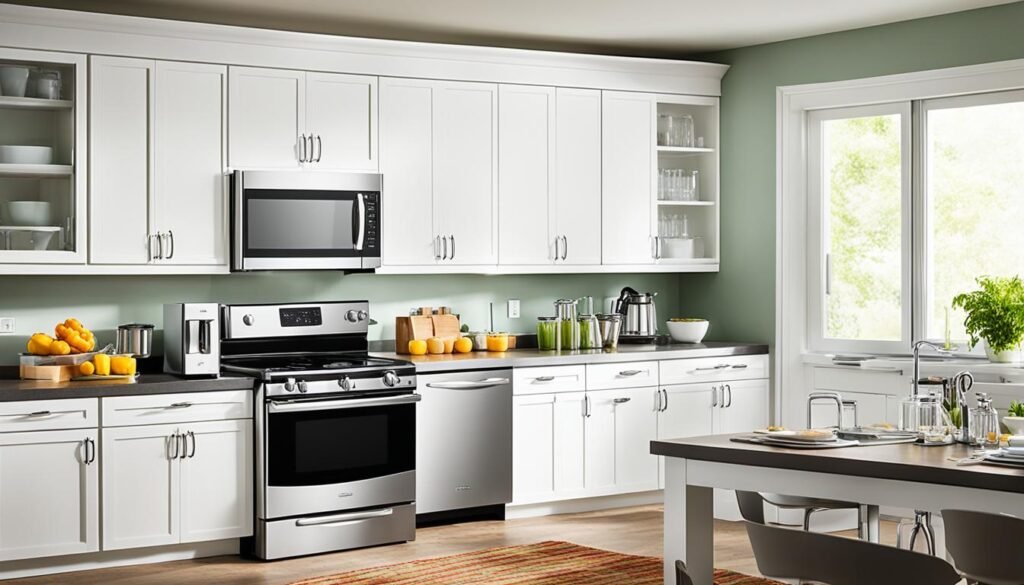
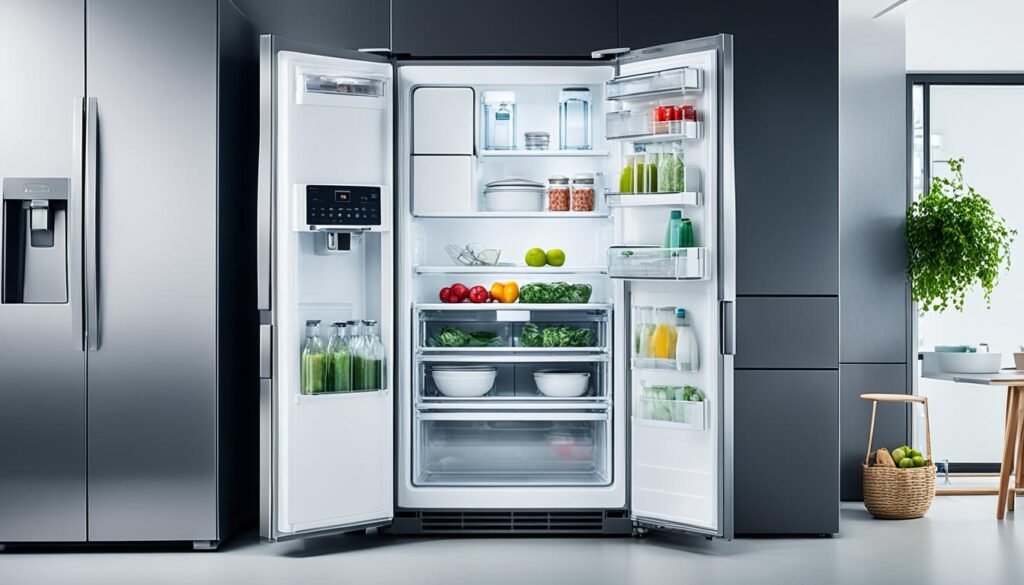
Keeping your kitchen well-organized is key for anyone who loves to cook. It’s crucial to sort your kitchen stuff right, like cookware, utensils, food storage, and small appliances. Grouping these items helps you work better in the kitchen. It reduces mess and makes finding what you need easy.

Sorting your kitchen items well does more than just tidy up your cooking space. It makes cooking smoother and less stressful. With things in their place, you can get to your tools fast. This saves you time when you’re making meals.

Key Takeaways

  • Proper classification of kitchen items is essential for efficient organization and workflow
  • Categorizing cookware, utensils, food storage, and small appliances can minimize clutter and improve accessibility
  • Well-organized kitchens save time and reduce frustration during cooking and meal preparation
  • Classifying kitchen items into logical groups enhances the overall cooking experience
  • Effective kitchen organization allows users to quickly find the tools and equipment they need

Introduction to Kitchen Item Classification

Putting your kitchen items in clear groups is key to a working and efficient kitchen. It helps keep your space neat and makes finding your tools easy. This way, you can cook without extra mess and stress.

Importance of Organization

A tidy kitchen is not just pleasing to the eyes. It also improves how you cook. When everything is in its place, you don’t waste time looking for stuff. This saves you time and helps you enjoy cooking more.

Benefits of Proper Classification

Organizing your kitchen comes with big benefits. It makes working in the kitchen smoother and less frustrating. Plus, you get to enjoy new tools and recipes because you won’t be searching for hours.

“A well-organized kitchen with items grouped into logical categories can lead to improved functionality, reduced frustration, and a more streamlined culinary experience.”

Good kitchen organization also makes cooking a fun process. When you know where everything is, you get to focus on making tasty meals. It’s all about being creative, not overwhelmed by clutter.
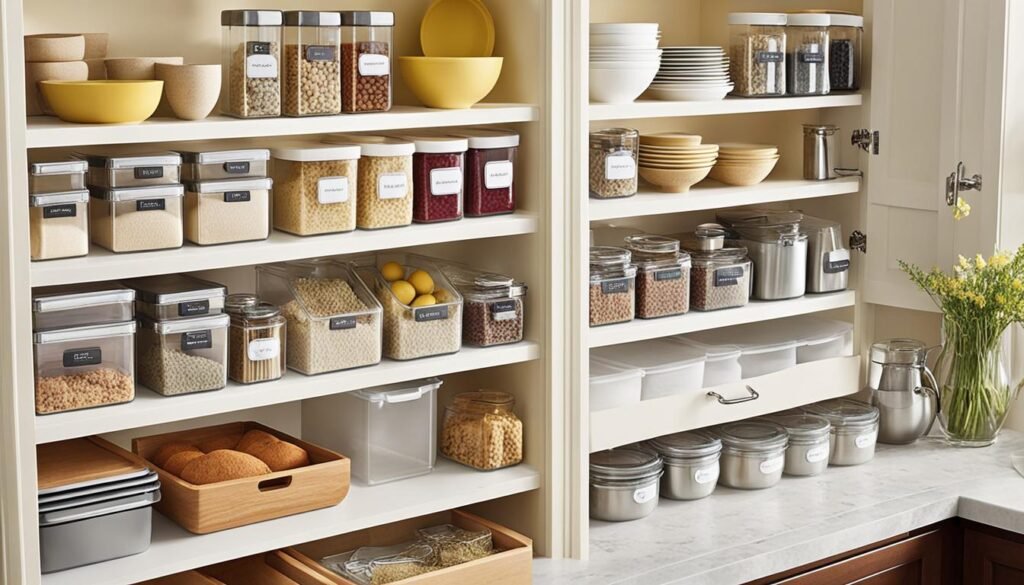
kitchen organization

Essential Cookware and Bakeware

In a tidy kitchen, important cookware and bakeware are key for making meals easily. You need items like frying pans, skillets, saucepans, and stockpots for many cooking methods. Also, baking dishes and sheet pans help with baking and roasting in the oven.

Frying Pans and Skillets

Non-stick frying pans and skillets are crucial for breakfast. About 80% of homes should have at least one. They are perfect for cooking everything from omelets to pancakes.

Saucepans and Stockpots

A 4-quart saucepan works well for 1 to 4 servings. For making larger meals like soups and stews, stockpots from 8 to 12 quarts are better.

Baking Dishes and Sheet Pans

8-inch glass baking dishes are great for the oven and microwave. Sheet pans help with baking cookies and roasting veggies perfectly.

Cookware ItemRecommended Size/CapacityKey Benefits
Frying Pan/Skillet10-inch non-stickVersatile for breakfast cooking, searing, and sautéing
Saucepan4-quartSuitable for 1-4 servings, versatile for various cooking needs
Stockpot8-12 quartsIdeal for larger batch cooking, such as soups and stews
Baking Dish8-inch glassVersatile for oven-based cooking and microwave-safe preparation
Sheet PanStandard 18×13-inchEssential for roasting vegetables, baking cookies, and more

cookware and bakeware

By organizing your cookware and bakeware tools well, you make cooking easier. You’ll find what you need faster, making cooking more fun and efficient.

Classify Kitchen Items

Organizing your kitchen is important for efficiency and ease. By sorting your items well, you make a neat cooking area. This involves grouping items that work the same way or are used for similar tasks.

Start by thinking about the main types of kitchen tools. You have cookware, bakeware, prep tools, utensils, appliances, and gadgets. In each group, you can sort things further based on what they do or their features.

  1. Cookware: Includes things like frying pans and stockpots. They’re for cooking on the stove or in the oven.
  2. Bakeware: This has dishes and pans for baking or roasting in the oven.
  3. Prep Tools: Knives and cutting boards are here, for getting your ingredients ready.
  4. Utensils: It’s got spatulas and whisks for handling food while you cook.
  5. Appliances: These are the big tools like blenders. They help with special cooking tasks.
  6. Gadgets: This is for the small tools that can make cooking easier. Think can openers and zesters.

By placing your kitchen items in these clear groups, you won’t have trouble finding what you need. This makes cooking more smooth and fun. Make sure you set up your kitchen in a way that makes sense for you. This will turn your kitchen into a space that works really well for you.

“A well-organized kitchen is the foundation of a successful culinary journey.”

Prep Tools and Utensils

Good prep tools are key for any kitchen. Knives, cutting boards, measuring cups, and stirring tools are must-haves. They make cooking easier and more fun.

Knives and Cutting Boards

Every kitchen needs sharp knives. From big chef’s knives to little paring knives, having a variety helps a lot. Don’t forget about the cutting boards. They keep your counters safe and make cutting easier.

Measuring Cups and Spoons

Exact measurements are vital for cooking and baking right. With good measuring cups and measuring spoons, you can be precise. They’re important for mixing a cake or adding flavor to your food.

Mixing and Stirring Utensils

After measuring, mixing things well is next. Tools like mixing bowls, whisks, and stirring utensils are a big help. They make sure everything comes together smoothly in your dishes.

Taking care of your prep tools can save time and improve your meals. Choosing the best knives, cutting boards, measuring cups, and stirring tools is smart. It helps your kitchen run better and your dishes turn out great.

Small Appliances and Gadgets

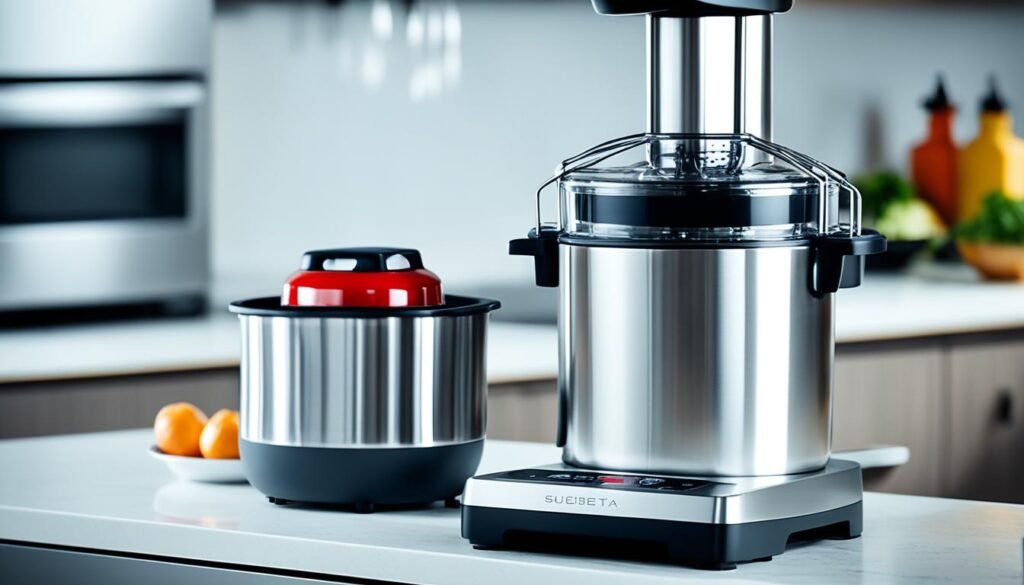
Small appliances and gadgets are key in a modern kitchen. They help make food prep easier and increase efficiency. Tools like food processors, blenders, and more enhance your cooking experience.

Food Processors and Blenders

Food processors and blenders are essential. Food processors chop, puree, and blend ingredients for dips, sauces, and nut butters. Blenders handle smoothies, milkshakes, and soups with ease.

Graters and Zesters

Specialized tools like graters and zesters are great for garnishing and adding flavor. A top-notch grater finely shreds vegetables. A zester brings a fresh, tangy taste with citrus peels.

Openers and Sharpeners

Don’t forget about can openers and knife sharpeners. Can openers get into cans easily, in both manual and electric types. Knife sharpeners maintain sharp blades for precise cutting.

Organizing small appliances and tools well is crucial. It helps make your kitchen efficient. Whether you love cooking or are just starting out, these essentials will boost your kitchen game.

Conclusion

It’s key to classify kitchen items the right way for an organized and efficient space. Grouping things like cookware and prep tools improves how you work. It helps lessen mess and makes cooking smoother. This makes you work faster, save time, and enjoy cooking more.

By arranging your kitchen tools wisely, you make a better place to cook. This is true whether you cook at home or in a restaurant. Good organization boosts your efficiency, food quality, and safety. When you choose the right way to organize, your kitchen tools work better and make cooking more fun.

Knowing about different kitchen items and what they’re for lets you pick the best. You can then handle any cooking task better. With the right knowledge and a plan, you fear less in the kitchen. You work better and enjoy cooking more. Trust your sets of cookware, prep tools, and small appliances to meet your needs.

FAQ

Why is properly classifying kitchen items important?

Properly sorting kitchen items helps keep things tidy and efficient. This makes it easier to cook with joy. Your cooking area will be less messy and more functional.

What are the benefits of organizing kitchen items into logical groupings?

Grouping kitchen tools wisely has many pluses. It cuts down on mess and helps you cook smoothly.

This smart organization lets you quickly grab what you need, making cooking more fun.

What are some examples of essential cookware and bakeware items that should be properly classified?

Frying pans and skillets are key for many dishes. They are used for quick cooking and searing.

Saucepans and stockpots are important for soups and sauces. Baking dishes and sheet pans are a must for oven meals.

How can kitchen items be classified for improved organization?

To organize your kitchen better, group similar items. Think about what each item does. Sort your cookware, bakeware, and tools by use.

What types of prep tools and utensils should be properly classified in the kitchen?

Sorting prep tools is smart. Include knives, cutting boards, and measuring items.

Don’t forget mixing and stirring tools. They help combine ingredients well.

What kind of small appliances and gadgets should be classified in the kitchen?

Don’t overlook small appliances in your sorting. Place food processors and blenders together. Graters and zesters should also have a spot.

And, put openers and knife sharpeners in one place. They’re handy items too.

Source Links

Which Colors Make a Room Appear Smaller?

Colors That Make a Room Appear Smaller

Nine out of ten interior designers think color is key in how we see a room. Many think dark colors make a room look tiny. But the truth is, the choice of color depends on how it works with light and your vision.

The right colors can turn a small room into a cozy retreat or make it feel open. For example, picking navy blue for a bathroom or a teal for the kitchen can change everything.

Key Takeaways

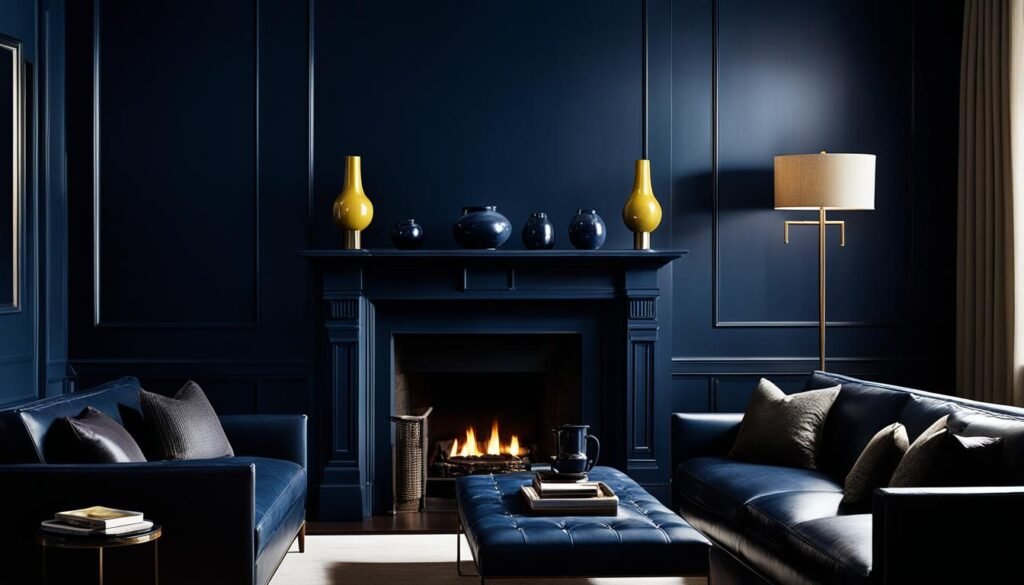
  • Dark hues and warm tones can make a room feel smaller and more intimate by advancing the walls.
  • Light, cool colors can visually push the walls back, creating the illusion of a larger, more open space.
  • Careful consideration of lighting, decor, and personal preference is crucial when using color to shape a room’s appearance.
  • Vertical stripes and strategically placed mirrors can also contribute to the perception of space in a small room.
  • Minimizing clutter and utilizing smart storage solutions are essential for maintaining a spacious, uncluttered feel.

Learning about colors and design can change how your rooms feel, big or small. Whether you love dark or light shades, you can make your space just the way you want.

Colors That Make a Room Appear Smaller

The colors you pick for your room can change how big it feels. Dark colors make the walls seem closer. Warm shades add a cozy feel. Knowing color psychology can help you make a small space seem just right.

Dark Hues and the Small Space Illusion

Dark colors make walls look nearer, creating coziness. However, the room might feel too small. Since dark shades don’t reflect light well, they can make walls feel like they’re closing in.

Warm Tones and Visual Perception

Warm colors, such as red, orange, and yellow, also make walls seem tighter. This boosts the room’s cozy vibe. Using dark colors with warm tones ramps up this effect.

Knowing about color psychology is a big advantage in room design. By using dark and warm colors wisely, you can adjust how people see your space. This helps you create the perfect vibe for any room.

dark hues

“Dark colors have a way of ‘advancing’ in a room, making the walls seem closer than they actually are.”

The Power of Color Psychology

The colors you pick for your house can change everything. They affect how a room feels and what mood it sets. By choosing the right colors, you can make your home a place that looks good and feels good too.

Warm colors bring energy and passion. They make a room feel alive. Reds and oranges can make you feel excited and ready for action. On the other hand, cool colors like blues and greens are calm. These colors help you relax. They bring a sense of peace to a room.

The lightness or darkness of a color also matters. Light colors can make a room feel open and relaxing. Darker colors make it cozy. Mixing these types of colors can find the perfect balance. This way, you’ll create the atmosphere you want in each room.

Does your living room need a boost of energy? A warm color theme can make it lively. For bedrooms, cool colors are best. They help you relax and sleep better. And if you work from home, blue or green could improve your focus.

Knowing about color psychology is important in interior design. It lets you design spaces that are both beautiful and good for your health. Whether you want to make a room lively, calm, or balanced, color can do the trick.

color psychology

ColorPhysical EffectsPsychological Association
RedFaster and more powerful reactions, higher blood pressure, and heart ratePhysical energy, passion, and aggression
OrangeIncreased appetite and energyEnthusiasm, creativity, and optimism
YellowEnhanced memory, neural activity, and raised blood pressure and pulseHappiness, warmth, and intellect
GreenSlower heart rate and preservation of energyHarmony, growth, and nature
BlueLower heart rate and blood pressure, lower body temperature, slower breathing, and improved sleepCalmness, trust, and productivity
PurpleEnhanced senses and self-awarenessCreativity, luxury, and spirituality

Color choices can really change how you feel in a room. Understanding color helps you pick the best ones. You can create a lively living room or a calming bedroom. The right color design can make your home look and feel better.

Cool Tones: A Contrasting Effect

Cool tones can make a room seem bigger. Colors like blues, greens, and purples make walls look further back. Yet, if a cool color is too bright, it won’t have this effect. So, finding the right balance is key.

Combining Cool Tones and Lighting

Combining cool hues with clever lighting is like magic. It can add depth and a feeling of space to a room. Adding dark, cool colors can also make a room feel cozy, yet still look deep because of the lighting.

Imagine adding a deep, moody blue to your walls. Then contrast it with white on the ceiling and edges. This makes your space seem bigger and welcoming. Or you could go for a light, airy blue on the walls. Pair it with lots of lights. The room will magically appear larger.

Color SchemeLighting ApproachPerceived Room Size
Deep, Moody Blue WallsBright, White Ceiling and TrimLarger and More Inviting
Light, Airy Blue WallsMultiple Light SourcesExpanded Perception of Space

Think through how cool colors and light work together. You can build a room that’s big and beautiful. It should also match your taste.

“The more you know about the power of color, the more you can use it to create the right mood.”

To get cool tones right, you need the perfect mix of color and light. Play around with colors and lights. This will help you discover how to make your space feel just right.

Room Lighting and Interior Design Tips

Room lighting is key to making a home feel warm and welcoming. It plays with the paint colors and can change a room’s size and mood. Dark colors might look different in bright light, so test them at different times.

How you use light and dark shades together matters a lot. If you want a room to feel big and open, keep the colors similar. Mixing warm and cool colors right can make a room look inviting and pretty.

Having many lights in a room makes it feel cozier and larger than it is. Don’t just use one big light in the middle. Put lights all around. Placing mirrors near lights can make your space look bigger, too.

To really improve your room’s look, try different light fixtures. Maybe glass wall lights or square lamps. They can make your place feel more stylish and roomy.

FAQ

How can dark colors and warm tones make a room appear smaller?

Dark colors and warm tones can make a room feel cozier and smaller. They do this by ‘advancing’ the walls, which makes the space seem tighter. It’s like the walls are closer than they really are.

Is it a myth that dark colors always make a room look smaller?

The idea that dark colors always shrink a room is a myth. Some dark shades can actually make a room feel more open. They do this by softening the corners, creating a sense of depth.

How do light and dark colors affect the perception of room size?

Light and dark colors work differently in rooms. Their effect depends on various things, like how you light the room and what decor you choose. Dark colors can absorb light, which might shrink a room’s perceived size.

How do warm and cool colors affect the perception of room size?

Warm colors, such as dark shades, can make a room feel smaller but cozier. This is because they pull the walls closer. Cool colors, though, like the opposite. They create the sense of more space by making walls seem further away.

How does room lighting affect the perception of color and space?

Light is key when picking paint colors. In a bright room, darker colors might look dull. It’s wise to test different paints in your room at different times to see the true colors.

Source Links

Identifying the Weakest Parts of a Plumbing System

Weakest Parts of Plumbing System

Recently, in a big building under construction, only the sprinkler parts on the second floor burst. This finding shows that sometimes plumbing problems happen in just one area. It’s very important to know where a plumbing system is weakest and how to fix those issues before they cause big problems. A building’s plumbing is key to its safety and function. Problems like weak pipes can lead to severe issues, like burst pipes, water damage, and mold – which all cost a lot of money to fix.

Understanding what makes pipes weak and how to keep them from breaking down is vital. Issues like corrosion and cold weather, as well as wrong installation and old equipment, can hurt a plumbing system. It’s important to watch for these problems and deal with them early to avoid a disaster.

Key Takeaways

  • Localized issues, such as burst sprinkler joints and heads, can indicate weaknesses in a plumbing system.
  • Corrosion is a common cause of weakness in copper piping, with factors like high pH water, biofilms, and incompatible metals contributing to the problem.
  • Freezing temperatures can lead to pipe bursts, highlighting the importance of proper insulation, piping materials, and temperature control.
  • Visual inspection for signs of corrosion, such as water stains, fungus, and blue/white build-ups, can help identify potential weaknesses early on.
  • Regular maintenance, including cleaning, pressure checks, and sediment flushing, can extend the life of a plumbing system.

Common Culprits Behind Weak Plumbing Systems

Your home’s plumbing system needs to be strong and reliable. However, many things can make your plumbing weak. This can cause problems like Plumbing Leaks and Outdated Fixtures. It’s important to know the common causes of these problems. This knowledge helps us prevent and fix them.

Improper Installation

Bad installation can immediately weaken pipes and joints. It can also cause Pipe Corrosion over time. An example is a burst sprinkler system in a new building. The issue was due to a bad install causing joints to break when water froze.

Corrosion

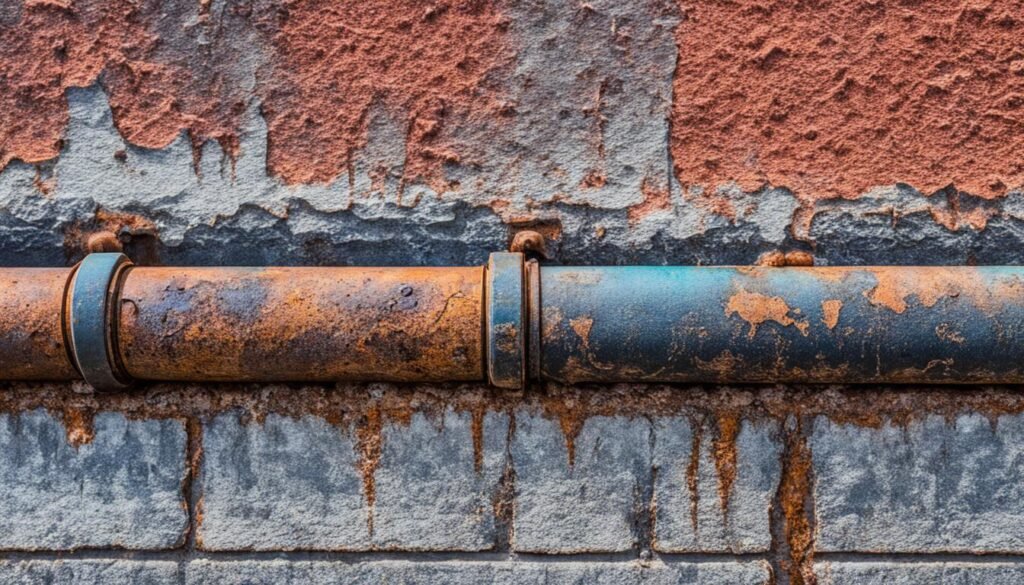
Pipe Corrosion is a big issue, especially in copper pipes. Copper has a natural film that can break down. This happens if water is too hard or by other means like biofilms. Look for white or blue growth on pipes to spot corrosion.

Freezing Temperatures

Many factors can cause Burst Pipes due to freezing. This includes the type and location of pipes. For example, a frost-free spigot burst because it wasn’t heated properly. A theatre’s pipe froze due to bad design, allowing cold air from outside to reach the pipe.

Pipe Corrosion

Learning about plumbing weak spots helps homeowners and managers. They can find and fix issues early. This keeps the plumbing strong and reliable for a long time.

Weakest Parts of Plumbing System: Early Detection and Prevention

Looking out for the weakest parts of a plumbing system is vital. It’s all about being on the ball and checking your home’s plumbing often. Spotting issues early can save you a lot of money on repairs. This part will look at how you can easily find and stop plumbing issues.

Visual Inspection

Checking your plumbing system visually can spot early signs of trouble. Keep an eye out for odd pipe colors, discolored water, and low water pressure. These might mean there’s pipe corrosion or clogged drains. Knowing how your plumbing is set up lets you find and fix problems before they become large.

Material Selection

Choosing the right plumbing materials is key for your system’s health. Each type of pipe has its good and bad points. But, picking what suits your home best will lower the odds of plumbing leaks and burst pipes. Careful thought on materials can make the weakest parts of the plumbing system stronger.

Mitigating Environmental Factors

The weather and other natural factors can harm your plumbing. Insulating against freezing temperatures is crucial to avoid burst pipes. Keeping indoor humidity in check also stops pipe corrosion. For certain areas, protecting against harsh soils and damp can need special steps. This involves things like cathodic protection and waterproof barriers.

Plumbing Inspection

Good home plumbing care means regular checks, choosing materials wisely, and fighting off the environment. Doing these things helps you find and fix the weakest parts of your plumbing. This can help avoid issues like water pressure problems, sewer line trouble, and faulty water heaters. Catching problems early and stopping them is the best way to keep your plumbing in top shape in your dream home.

Technological Solutions and Preventive Maintenance

The weakest parts of plumbing systems require careful attention. Luckily, modern technology has solutions for these problems. Leak detection systems use sensors to check water flow. They find leaks or weak spots long before you see any signs. Some even stop the water if they sense a big leak. This can save you from the trouble of burst pipes or big plumbing leaks.

Preventive maintenance is key to protect plumbing everywhere. Doing things like cleaning, checking pressure, and clearing out sediments helps a lot. This not only keeps your pipes working longer. It also keeps your water safe and tasty. By doing these things regularly, you cut down on the risk of big plumbing problems. You also keep your water clean by removing anything that might make it taste bad.

Leak Detection Systems

Systems with sensors can spot plumbing leaks or weak areas early. They’re smart enough to turn the water off when they find a big leak. This stops burst pipes from causing a lot of damage.

Routine Maintenance

It’s crucial to maintain your plumbing regularly. This means cleaning, pressure checks, and getting rid of sediments. Doing these things reduces the chance of facing major plumbing troubles. It helps avoid clogged drains, water pressure issues, and sewer line problems.

Professional Assistance

DIY plumbing care is helpful. But professional plumbers offer unmatched expertise and experience. They can assess your plumbing fully, suggest top-quality materials, and tackle big issues most owners can’t. While professional help may seem costly at first, it’s worth it. It prevents big disasters like faulty water heaters and bathroom plumbing repairs.

By using tech solutions and keeping up with preventive maintenance, you look after your plumbing’s weakest parts. You ensure your Dream Home Digest stays in top shape. The right approach lets you dodge the usual problems that affect plumbing. You also keep a steady, high-quality water supply at your home.

Conclusion

To keep your plumbing in top shape, anticipate and fix weak spots. This guide has shown you how to spot them early on. This prevents big problems like burst pipes, making your home’s plumbing last longer and work better.

You’ve learned to find and solve plumbing issues like leaks and clogs. You know how to address low water pressure and broken sewer lines too. With the right tech and a focus on preventing problems, you can protect your home from costly damage.

Keeping your plumbing great means staying alert. When you face a big issue, know when to call the pros. With what you’ve learned here, you can handle the toughest parts of your plumbing and keep your dream home safe and comfy.

FAQ

What are the weakest parts of a plumbing system?

The plumbing system’s weak spots are pipes that can rust or get clogged. They also include old fixtures and sudden changes in water pressure. Problems with sewer lines, burst pipes, and broken water heaters are common too.

What causes plumbing leaks?

Plumbing leaks happen for a few reasons. These include bad installation, pipes that get old and corrode, and even when freezing temperatures cause pipes to burst.

How can I detect and prevent pipe corrosion?

To find and stop pipe corrosion, watch out for changes in color or your water. Also, if your water pressure drops, it could be a sign. Doing regular checks and using good materials for your plumbing system can reduce the chance of corrosion.

What can cause clogged drains?

Hair, soap scum, and other debris are often behind clogged drains. To stop this, it’s important to clean your plumbing system regularly and check for any issues.

How can I address water pressure issues in my home?

Issues with water pressure might be from old fixtures, leaks, or problems in the main supply. If you’re having these issues, it’s best to get advice from a professional plumber to fix the problem.

What can cause sewer line problems?

Problems with sewer lines can be due to tree roots, debris blockages, or pipe damage. By checking and maintaining your sewer line often, you can avoid big repairs.

How can I prevent burst pipes?

To avoid burst pipes, protect them from freezing, make sure they are installed well, and watch for signs of wear. This includes keeping your home’s humidity at a safe level.

What are the common issues with water heaters?

If a water heater fails, you might notice water temperature changes, leaks, or it might stop working. To prevent this, keep your water heater in good shape with regular checks and speedy fixes.

How can I address bathroom plumbing repairs?

Fixes in the bathroom can be as simple as unclogging drains or stopping faucet leaks. But they could also be complex issues like sewer line problems. For any bathroom plumbing work, it’s wise to call a professional plumber to ensure it’s done right.

Source Links

Categories of Home Appliances Explained

Home Appliance Categories

Home appliances cover devices that help with tasks like cooking, cleaning, and keeping food fresh. There are three main categories: major appliances, small appliances, and consumer electronics.

Major appliances are big items such as fridges, washing machines, and dishwashers. Small appliances are things like toasters, blenders, and coffee makers. Consumer electronics cover items like TVs and computers.

These gadgets have changed how we live. We used to rely more on full-time help. But as that changed, we looked for ways to make our homes chores easier.

The industry around home appliances has gotten bigger and more advanced. New tech and a focus on saving energy keep inspiring innovation.

Key Takeaways

  • Home appliances are devices used in the home to perform various tasks, including cooking, cleaning, and food preservation.
  • Home appliances can be categorized into three main groups: major appliances (white goods), small appliances, and consumer electronics (brown goods).
  • The home appliance industry has seen significant growth and consolidation, with advancements in technology and energy efficiency driving innovation.
  • Major appliances include refrigerators, washing machines, and dishwashers, while small appliances include toasters, blenders, and coffee makers.
  • Consumer electronics include TVs, computers, and other entertainment and communication devices.

Introduction to Home Appliances

Home appliances help with daily tasks at home. They make cooking, cleaning, and storing food easier. This allows people to enjoy their free time more. Home appliances cover everything from big machines like refrigerators to small ones like coffee makers.

Definition and Purpose

Home appliances are electrical devices for household work. They include cleaners and cookers. These tools make life easier and save time. They bring comfort and convenience to our daily lives.

There are both big and small home appliances. Major ones are air conditioners and washing machines. Small ones are juicers and toasters. TVs and home theaters are also in this group.

CategoryExamples
Major Appliances (White Goods)Air conditioners, dishwashers, clothes dryers, freezers, refrigerators, kitchen stoves, washing machines
Small AppliancesJuicers, electric mixers, coffee makers, blenders, toasters
Consumer Electronics (Brown Goods)Televisions, DVD players, home theater systems

In the 21st century, we rely more on these tools for comfort. Manufacturers are creating smart, sustainable appliances. They aim to meet our changing needs.

Home Appliances

Major Appliances: The White Goods

Major appliances, known as “white goods,” are big items used at home. They are crucial for a modern lifestyle. These items include air conditioners, dishwashers, and washing machines. They were once all painted white, leading to the term “white goods.”

Today, they come in many colors. These big machines are key in both the kitchen and laundry room, making life easier.

New major appliances focus a lot on saving energy. For example, modern energy-efficient refrigerators use 40% less energy than ones in 2001. If everyone in Europe swapped old appliances for new ones, they would save 20 billion kWh of electricity each year. This would also cut CO2 emissions by almost 18 billion kg.

A similar change in the US would mean saving 17 billion kWh of power. It would also cut down CO2 by 27,000,000,000 pounds. According to McKinsey & Company, replacing old appliances helps the most in reducing greenhouse gases globally.

New tech is letting appliances manage their power better. For instance, appliances can shut off or slow down when they’re not being used. This saves energy. Also, using gallium nitride transistors in new gadgets makes them use less power. But, they might cost more.

ApplianceAmperage (A)Wattage (W)
LaptopLess than 0.5Up to 100
Mobile Phone ChargerLess than 0.5Up to 75
Electric BlanketUp to 1.3Up to 300
KettleUp to 132200 to 3000
Washing Machine102200
Hair Dryer102200
Immersion Blender1.6350
Dishwasher102200
Toaster9.02000
Portable Air Conditioner9.32000
Patio HeaterUp to 131200 to 3000
Slow Cooker0.5 to 1.1Up to 250
Toothbrush ChargerLess than 0.5Up to 2.5

This table compares the power use of different appliances. It highlights how much power big machines like washing machines need. Knowing this can guide people to make energy-efficient choices. It can also help them manage their home’s power better.

Major Appliances

“Replacing old appliances is one of the most efficient global measures to reduce greenhouse gas emissions.”

– McKinsey & Company

Home Appliance Categories

There are three main types of home appliances: major (white goods), small, and consumer electronics (brown goods). They each have unique functions. These categories have seen big technological changes, making life easier.

Major Appliances (White Goods)

Major appliances are big and do key home tasks. This group includes fridges, washers, dishwashers, ovens, and air conditioners. They might sit in a spot or be movable. They are key for a comfy and smoothly running home.

Small Appliances

Small appliances are small and do specialized tasks. They have things like blenders, coffee makers, toasters, and vacuum cleaners. These items make life more convenient and meet specific home needs.

Consumer Electronics (Brown Goods)

Consumer electronics are for fun and staying connected. This group has TVs, computers, speakers, game systems, and phones. They offer entertainment, ways to connect, and easy access to info in today’s digital world.

All these types of appliances have evolved with technology. They make our lives easier, more efficient, and fun at home.

Appliance CategoryKey FeaturesExamples
Major Appliances (White Goods)Large, heavy-duty household appliances for essential tasksRefrigerators, washing machines, dishwashers, ovens, air conditioners
Small AppliancesCompact, portable electrical devices for specialized functionsBlenders, coffee makers, toasters, irons, vacuum cleaners, kitchen accessories
Consumer Electronics (Brown Goods)Entertainment and communication devices for leisure and connectivityTelevisions, computers, sound systems, gaming consoles, mobile devices

Safety Standards and Regulations

To keep us safe, there are strong rules and guidelines for making sure our household appliances are safe. These come from the International Electrotechnical Commission’s IEC 61140 standard. It guides experts on making standards for electrical items, including appliances.

Appliances are split into groups by how they are insulated and grounded. Class I Appliances have basic insulation and a ground connection. Class II Appliances use double or reinforced insulation without a ground connection. Then, Class III Appliances work on Extra-Low Voltage (SELV) and don’t need a ground connection.

Before appliances hit the shelves, they must pass Portable Appliance Testing (PAT). This makes sure they are safe for us to use. It safeguards us and animals from dangers like electric shocks. Following these safety rules is key for using appliances safely and responsibly.

Appliance ClassDescriptionExample Appliances
Class IRely on basic insulation and a protective earthing connectionRefrigerators, washing machines, electric ovens
Class IIHave double or reinforced insulation without a protective earthing connectionTelevisions, microwaves, toasters
Class IIIOperate on Extra-Low Voltage (SELV) and do not require protective earthingCordless power tools, low-voltage chargers

The IEC 61140 standard gives a solid base for creating safety rules for home appliances. This system ensures that appliances meet strict Appliance Safety Standards and enables consumers to use their items safely.

Technological Advancements and Trends

The world of home appliances is changing fast, thanks to new tech. The industry is now into Home Automation and Internet-Connected Appliances. This changes how we use and control our devices at home.

Integrating Smart Home tech into appliances is a huge trend. Manufacturers add tech to connect and control appliances from your phone. This lets you manage your home’s devices from anywhere, making life easier and more Energy Management.

Home Automation and Internet Connectivity

Home Automation is reshaping the home appliance world. Now appliances have smart features like sensors and Wi-Fi. They can talk to each other and you through apps or voice. This brings amazing changes like:

  • Changing settings, getting alerts, and fixing problems from far away.
  • Automating how appliances work to save energy and money.
  • Working smoothly with other smart home products.
  • Fixing issues before they cause big problems.

These trends make our lives better and help the planet by saving energy. It means we can control energy use more effectively and be greener.

Advances in home appliances tech are making our homes better. The Smart Home movement is picking up. Soon, your devices will fit your life perfectly, making things more convenient, efficient, and letting you control your home’s Energy Management better.

Conclusion

Home appliances are now key in American homes, making life easier. Major appliances help with cooking, cleaning, and keeping our homes comfortable. Smaller gadgets enhance our lives further, changing a lot as time goes on.

To keep us safe, there are rules and guidelines for using these home appliances. Thanks to technological advancements like home automation and internet connectivity, appliances are getting smarter. This means more innovation and better solutions for our needs.

Thinking about upgrading your house? Knowing the latest trends and options is key. With the right choices, you can make your home more convenient, efficient, and integrated. This lasts and improves your lifestyle for the long run.

FAQ

What are the main categories of home appliances?

The main types are major appliances (like fridges and ovens), small appliances, and consumer electronics (such as TVs and cameras).

What are some examples of major appliances?

Air conditioners, dishwashers, and clothes dryers are a few examples. You can also include refrigerators, stoves, and washing machines in this list.

What is the purpose of home appliances?

They make our daily chores easier and faster, giving us more free time. For example, they help cook, clean, and keep our food fresh.

What safety standards and regulations are in place for home appliances?

Organizations like the IEC set safety rules for home appliances. These include rules on insulation and grounding. All appliances go through tests to check they’re safe to use.

How are home appliances evolving with technological advancements?

Now, appliances can connect to the internet and work with smart home setups. This lets us control them from far away and be more energy-efficient. It all fits into the idea of the IoT and smart homes.

Source Links

Kitchen Appliances vs. Kitchen Equipment: What’s the Difference?

Kitchen Appliances vs. Equipment

Kitchen appliances and equipment are key in any kitchen. Yet, people often mix them up. Both are important but do different jobs. This piece dives into what sets them apart. It aims to help you choose well when setting up your kitchen.

Key Takeaways

  • Kitchen appliances are electrically or mechanically powered devices that automate cooking and food preparation tasks, such as ovens, microwaves, and blenders.
  • Kitchen equipment encompasses manual, non-electric tools and utensils essential for food preparation, such as knives, pots, and pans.
  • Appliances are typically designed for efficiency and convenience, while equipment emphasizes durability and versatility.
  • Knowing the differences between appliances and equipment helps in choosing the best tools for cooking. This knowledge can make your cooking better.
  • Buying good kitchen appliances and equipment from trusted sources can give you good value for a long time.

Defining Kitchen Appliances and Equipment

In the kitchen, there’s a bit of confusion over what’s an “appliance” and what’s “equipment.” Let’s clear things up by looking at their definitions. This will help us tell the difference between these important kitchen tools.

What are Kitchen Appliances?

Kitchen appliances are big machines or gadgets that run on electricity or gas. They do specific jobs like cooking, keeping food cold, or washing dishes. Items such as stoves, ovens, refrigerators, dishwashers, and even blenders and coffee makers fall into this category. Appliances are known for being big, detailed, and they often fit into the kitchen’s design.

What are Kitchen Equipment?

In contrast, kitchen equipment includes a wide array of tools, utensils, and some larger appliances for preparing, cooking, and storing food. Think of things like pots, pans, knives, cutting boards, and special gadgets like pasta makers or stand mixers. This type of gear is easier to move around, more adaptable, and has a more direct, hands-on use compared to appliances.

Here’s an analogy to help understand: in sports, there’s a difference between a cricket bat (equipment) and a bowling machine (appliance). They’re both essential but serve different roles within the game.

Just like in sports, the kitchen works best with a mix of appliances and equipment. Knowing the difference between these tools can help both homeowners and chefs make smart choices for their kitchen needs.

Kitchen Appliances vs. Equipment

When crafting your kitchen, think about things like cost, long-term value, and what you like to cook. This will help you choose the perfect blend of kitchen appliances and equipment for a top-notch culinary experience.

Key Characteristics of Kitchen Appliances vs. Equipment

When looking at kitchen tools, we see a big difference between kitchen appliances and kitchen equipment. It’s helpful to know these differences when setting up your kitchen at home or in a restaurant.

Kitchen Appliances are usually big, complex, and have specific uses in cooking. Think of things like blenders, mixers, and food processors for countertop appliances. Also, you have major appliances like ovens and refrigerators. They use electricity or gas and stay in one place in the kitchen.

Kitchen Equipment is quite the opposite. It’s smaller, can be moved around easily, and can do many things. This includes kitchen gadgets, cookware, bakeware, and small appliances. They are not fixed and are great for many kitchen tasks.

The big difference is how specialized they are. Appliances do specific jobs in the kitchen, unlike equipment. Equipment is more versatile and can help with a wider range of tasks. This makes equipment a smart choice for many kitchens, both at home and in restaurants.

Kitchen AppliancesKitchen Equipment
Larger, more complexSmaller, more portable
Designed for specific cooking/food tasksVersatile and multi-purpose
Powered by electricity or gasCan be easily moved and used for various tasks
Permanently installed in the kitchenNot necessarily fixed in place
More specializedMore versatile

Understanding these differences helps you choose the best tools for your kitchen. It doesn’t matter if it’s for a home kitchen or a commercial cooking space. Knowing what each type is best at, you can have a kitchen that’s ready for all your cooking needs.

kitchen appliances and equipment

Kitchen Appliances vs. Equipment

There’s an important difference between kitchen appliances and kitchen equipment. They both have big parts in cooking at home. But, they do very different jobs.

Kitchen Appliances do whole cooking tasks, like baking, grilling, or slow cooking. They’re high-tech and can do a lot. Fridges, ovens, dishwashers, and more are examples.

On the flip side, kitchen equipment helps with specific tasks like cutting or mixing. It’s more hands-on, needing you to use it directly. Think of knives, cutting boards, and blenders.

When choosing, think about what you cook and how you cook it. Big tasks might need appliances. But, for smaller details, equipment can be better.

Kitchen AppliancesKitchen Equipment
  • Refrigerators
  • Ovens
  • Stovetops
  • Dishwashers
  • Microwaves
  • Blenders
  • Food Processors
  • Rice Cookers
  • Slow Cookers
  • Air Fryers
  • Knives
  • Cutting Boards
  • Mixing Bowls
  • Whisks
  • Spatulas
  • Peelers
  • Graters
  • Measuring Cups and Spoons
  • Baking Sheets and Pans
  • Serveware

Whether you like kitchen appliances or kitchen equipment more, good tools can change your cooking. Look at all the options to find what suits your style and cooking needs best.

“The best kitchen is not the one with the most expensive appliances, but the one where conversations happen while great food is made with love.” – Unknown

Importance of Proper Tools and Equipment

Enhancing Efficiency and Quality

The right kitchen tools and equipment boost how well you cook. They make things easier, fun, and your food taste better. Good appliances can also last longer with the right care.

Catering is a big business, making over $53 billion each year. Smart moves like focusing on cold foods in the summer can make restaurants more money. Picking the right knife in big kitchens is key to cooking well. Good leadership helps kitchen staff work smoothly.

Following the Food Code means cleaning kitchen gear every 24 hours. This keeps them working well, uses less energy, and breaks down less. It also keeps food safe to eat.

Clean machines save on bills by using less power. They don’t break down as much, so they serve great food all the time. This keeps customers happy and could mean more money for the business.

Taking care of kitchen gear makes it last longer, so you don’t have to buy new stuff as often. It also keeps the kitchen safe for workers. This cuts the risk of accidents.

Regular cleaning and care can mean your tools last longer, needing fewer fixes. Always follow what the manufacturer tells you to keep them in top shape. Sticking to a plan stops big problems before they happen.

Setting up kitchen gear the right way can make it work better and save energy. TruShine Services offers many ways to keep your kitchen running smoothly, from cleaning to fixing and more.

Trends and Personal Preferences

The world of kitchen appliances is changing fast to meet the needs of today’s homeowners. Smart features and green designs are now common. These changes make your kitchen experience better in many ways.

Smart kitchen gadgets are leading a tech revolution in how we cook and prepare meals. Now, everything from your oven to your fridge can be smart. They can do things like make shopping lists for you and adjust cooking times on their own. This makes cooking easier and more fun than ever before.

There’s a big push for green and energy-saving kitchen tools. Many people look for products that help the planet and save them money. You can find things like cooktops that use less energy and dishwashers with water-saving features. Choosing these options is good for your pocket and the Earth.

Your cooking style and kitchen design influence the tools and appliances you pick. There are many options available, whether you love to cook or just enjoy easy meals. Designing your kitchen to fit your lifestyle can make cooking a joy.

It’s important to keep up with the latest kitchen trends and tech. This helps you make a kitchen that improves your cooking and dining experiences. Doing research before buying appliances can help you choose what’s best for you, whether it’s a fridge, oven, or any other tool.

Conclusion

Understanding the difference between kitchen items is key for those who love to cook. Using the right tools helps make your food better and cook smarter. No matter if you’re just starting out or an expert, having the right gear is vital.

The HORECA Store has a lot of top-notch kitchen gear. They have everything from eco-friendly stoves to amazing knives and pots. This store is perfect for both at-home chefs and professionals. They offer all you need to take your cooking to a higher level.

For any cooking scenario, having the perfect tools makes a huge difference. It helps you cook better food, save energy, and get great results every time. Enjoy the journey of cooking more with the right kitchen helpers by your side.

FAQ

What are the key differences between kitchen appliances and kitchen equipment?

Kitchen appliances are powered by electricity or gas. They do cooking, cooling, and cleaning tasks. Kitchen equipment includes tools and big appliances for cooking, preparing food, and storing it.

What are some examples of kitchen appliances?

Stoves, ovens, refrigerators, and dishwashers are kitchen appliances. Also, smaller tools like blenders and coffee makers fit in this category.

What are some examples of kitchen equipment?

Kitchen equipment consists of pots, pans, knives, and cutting boards. It also covers items made for special food tasks, like pasta makers and stand mixers.

How do the characteristics of kitchen appliances and equipment differ?

Appliances for the kitchen are big, complex, and serve specific cooking needs. Equipment is smaller, portable, and can do many jobs. Kitchen appliances are usually built into the kitchen and powered by energy sources. Equipment is moveable and used for different tasks.

What are the key functions of kitchen appliances and equipment?

Appliances lead the way in cooking steps, such as baking, grilling, or sous vide. On the other hand, equipment helps with smaller, specific tasks, like cutting, mixing, or blending.

How can the right kitchen tools and equipment enhance the cooking experience?

Choosing the correct tools can make cooking easier, fun, and the food taste better. Quality appliances and equipment, with good care, last longer. They also make cooking more efficient.

What factors should be considered when selecting kitchen appliances and equipment?

Think about how you cook, the space you have, and what you need personally. Customizing your kitchen gear to your taste can make cooking amazing and fun. Your choices can truly enhance your cooking time.

Source Links

The Crucial Role of Plumbing in Modern Society

Importance of Plumbing

Did you know, there are approximately 490,200 plumbers working in the United States? This number shows how crucial plumbing is today. It isn’t just a nice thing to have. It’s essential for clean water, proper waste management, and more. These are things we don’t always think about but use every day.

Plumbing lets you direct water to where you need it. It removes harmful substances, making water safe. With tools like motion sensors and water-saving showerheads, it helps save water. This, in turn, saves money and helps the environment. Plumbing technologies, such as tankless water heaters, save energy. They also lessen the need for plastic bottled water. The benefits are clear, from taking a hot shower to having a working toilet, we rely on plumbing.

Plumbing goes beyond simple comforts. It’s key for better public health and fighting diseases. By keeping our water clean, plumbing has boosted how long and well we live. The World Health Organization sees plumbers as essential for health care. They give us clean water for basic hygiene, which is vital for good health.

Key Takeaways

  • Plumbing is essential for providing clean water, efficient waste management, and a host of other benefits that enhance our daily lives.
  • Plumbing innovations, such as tankless water heaters and efficient showerheads, help conserve water and energy, saving you money and reducing your environmental impact.
  • Plumbing plays a crucial role in public health and disease prevention by ensuring the cleanliness of our water supply and eliminating certain illnesses.
  • The plumbing industry provides a stable job market, with about 490,200 actively employed plumbers in the U.S. and a projected job growth of 4% over the next decade.
  • Regular plumbing maintenance and inspection are essential for preventing home disasters and ensuring public safety.

Importance of Plumbing: Providing Essential Services

Plumbing is key to our modern life, bringing us clean water and good sanitation. Skilled plumbers set up, take care of, and fix our water and drainage systems. These systems are vital for keeping us healthy at home and in public places. Plumbing isn’t just about entry to clean water; it also manages waste to stop diseases from spreading.

Water Supply and Sanitation

Plumbing systems are vital for getting clean water to every place, from homes to big companies. Plumbers put in and fix the parts of a water system that help water flow freely. They also look after drainage, which is critical for getting rid of waste and stopping diseases.

Keeping plumbing in good shape is vital for public health and meeting rules. Bad plumbing can pollute water, risking illnesses. Having plumbers regularly check and fix problems stops diseases and keeps places clean.

Taking care of plumbing saves money in the long term by stopping bigger issues. Early problem spotting and fixing keep plumbing working longer. This can up a property’s worth and how energy efficient it is. It makes a home or building more attractive to buyers, too.

BenefitDescription
Cost SavingsRoutine plumbing maintenance can save money by avoiding more costly repairs.
Health RisksFaulty plumbing can lead to water contamination, causing health risks from bacteria or viruses.
Cleanliness and HygieneRegular plumbing maintenance ensures clean water supply and proper drainage, contributing to a hygienic environment.
Property ValueMaintaining plumbing systems increases property value and energy efficiency, making it more attractive to potential buyers.
Garbage DisposalProper plumbing maintenance prevents waste build-up in drains, reducing health hazards and environmental impact.
Lifespan of SystemsRegular checks and inspections help identify problems early, extending the lifespan of plumbing systems and appliances.

To wrap up, plumbing is vital for health and hygiene in our lives and communities. Plumbers protect our health, keep things clean, and safeguard property values. Getting professional plumbing help is smart for any home or business owner. It keeps your water and waste systems running well for years.

Water Supply Systems

Plumbing Innovations: Conserving Resources, Saving Lives

Plumbing innovations have changed how we use and save water. They include things like low-flow toilets and water-saving faucets. These new items help us use less water and save money on our bills.

Tankless heaters and other energy-efficient technologies also make a big difference. They heat water when you need it, without needing a tank. This saves a lot of energy and is better for our planet.

Caring for plumbing and stopping leaks is also crucial. It keeps our homes safe from water damage and mold. Fixing leaks quickly saves water and helps in dry areas that lack water.

The plumbing industry always works on new ways to help the planet. Things like smart water systems and eco-friendly materials are making a difference. They cut down on costs and lessen pollution.

Today, facing water issues and climate change, plumbing is more important than ever. New plumbing tech helps us use water more wisely and keep our planet healthy. Check out how you can bring these changes to your home in the Dream Home Digest at plumbersinhemetca.com.

InnovationImpact
Low-flow toilets and faucet aeratorsReduced water consumption, lower utility bills
Tankless water heatersImproved energy efficiency, smaller carbon footprint
Leak detection and repairPrevented property damage, water conservation
Smart water monitoring systemsEnhanced efficiency, reduced costs, minimized environmental impact

Plumbing Innovations

“Plumbing innovations have transformed the way we conserve our most precious resource – water. By embracing these advancements, we can build a more sustainable future for generations to come.”

Embracing Plumbing Innovations for a Sustainable Future

The plumbing industry is all about finding new ways to be green. From saving water with efficient toilets to heating water only when needed, these changes are good for our wallets and our planet.

  • Low-flow toilets and faucet aerators reduce water consumption by up to 30%, leading to significant savings on utility bills.
  • Tankless water heaters heat water on-demand, eliminating the need for constant tank heating and reducing energy usage by up to 50%.
  • Leak detection and timely repairs prevent property damage, mold growth, and water wastage, contributing to overall water conservation efforts.
  • Smart water monitoring systems and eco-friendly plumbing materials are transforming the industry, enhancing efficiency and minimizing environmental impact.

With climate change and water becoming scarce, innovative plumbing is key. By using these new technologies, we can save water and protect our planet. Our future depends on it.

Conclusion

The Importance of Plumbing in our world today is huge. It is key for our health, comfort, and well-being. Plumbing manages our water, keeps sanitation right, saves resources, and even saves lives.

Plumbing is always getting better. And its benefits are growing, helping us, our communities, and nature. Knowing this shows how vital plumbing is to our lives every day.

Everyone benefits from good plumbing, whether in Hemet, CA, or elsewhere. Upgrade your plumbing at home to keep your family safe and healthy. You can learn more at plumbersinhemetca.com. Or, get tips from the Dream Home Digest for expert advice.

FAQ

What is the importance of plumbing in modern society?

Plumbing is key for health, comfort, and safety. It helps control water supply. This ensures proper sanitation saving lives.

How does plumbing help with water supply and sanitation?

Plumbers make sure we get clean water and sanitation. They install and fix water systems. This includes making sure waste gets removed safely.

How have plumbing innovations improved resource conservation and safety?

Modern plumbing saves a lot of water with things like low-flow toilets. It saves electricity too. Fixing leaks stops water damage and prevents mold, keeping homes safe.

Source Links

Ideal Number of Colors for a Living Room

Number of Colors for Living Room

To create a beautiful living room, the choice of colors is crucial. Interior design experts recommend using between 4 to 5 colors. This range gives the room depth and balance.

Use the 60-30-10 rule to pick colors wisely. The main color should cover about 60% of the space. Then, the second color at 30%, and the accents at 10%. This approach makes your living room both eye-catching and harmonious.

Key Takeaways

  • The ideal number of colors for a living room is between 4 to 5 hues.
  • The 60-30-10 rule is a crucial guideline for achieving a balanced color scheme.
  • Incorporating a main color, secondary color, and accent colors can create a harmonious living space.
  • Combining warm and cool tones, as well as varying shades of the same color, can add depth and visual interest.
  • Personalization and confidence in color selection are key to curating a living room that reflects your unique style.

The Harmonious Color Rule: 60-30-10

The 60-30-10 color rule guides you to a balanced living room. It suggests using 60% of a main color, 30% secondary color, and 10% accent color. This creates a visually appealing and joyful space.

Understanding the 60-30-10 Color Rule

The 60-30-10 rule aims to balance and unify a living area. With 60% main color, the room gets a serene background. The 30% secondary color adds interest, and the 10% accent color brightens the look.

Color schemes like 60% white, 30% brown, and 10% green work well. It also fits with greige, black, and gold colors. This flexibility makes it perfect for many home spots, especially where people gather most.

Choosing the Right Colors for Your Living Room

Choose colors with the color wheel, your current décor, and trends. Begin with a calm base color, like white or gray. Add a lively secondary color, perhaps a blue or brown. Then, mix in a vibrant accent color, such as a bold yellow or red, for energy.

Change the color ratio to fit what you like, but keep it all harmonious. This will make your living room a place where colors speak beautifully together.

60-30-10 color rule

“The 60-30-10 rule in interior design is a classic for a reason – it creates a balanced, harmonious look that is both visually appealing and easy to implement.” – Dream Home Digest

The Golden Number: 4 to 5 Colors for a Balanced Interior

Interior designers suggest using 4 to 5 colors for a well-designed living room. This range balances visual excitement with a coherent look. Start with a base color, usually for big items like a sofa. Then, pick secondary and accent colors that go well with it.

Grounding the Color Scheme with a Base Hue

Pick a main color to set the mood for your living space. It can be a soft color like beige, gray, or a bright one like blue. This basic color should be about 60% of the room’s color.

Adding Contrasting Accents for Visual Interest

Add a secondary color for variety, covering roughly 30% of the area. This color should either match your base color or provide a pleasing contrast. For the final 10%, choose an accent color for small items like throw pillows or wall art.

This method helps your living room look well put together. Each color has a clear purpose in your design. Breaking the 60-30-10 rule a bit to a 60-30-10-10 can also work, adding another accent color for interest.

color harmony in interior design

The color selection is personal, focusing on what mood you wish to create. You might choose a single-color theme, colors that are opposite on the color wheel, or a mix. The main goal is to reflect your personal style and make your home a Dream Home Digest.

Number of Colors for Living Room: Striking the Perfect Balance

When you’re choosing colors for your living room, it’s all about finding balance. It’s good to mix warm and cool tones. This adds depth and makes the room interesting.

One way to do this is by picking three colors in the same family. Use a light, medium, and dark shade. This creates a harmonious yet varied look.

Incorporating Warm and Cool Tones

Combining warm and cool colors can make a room design pop. Warm colors like red and yellow make the room feel cozy. Cool colors such as blues and greens bring a calm vibe. Mixing these brings a well-rounded, attractive color scheme.

Creating Tonal Depth with a Trio of Shades

To find the perfect color mix, try a trio of shades in one family. For example, pick light, medium, and dark grays. This adds depth to your living room. It makes everything look blended and in harmony.

The ideal number of colors for your living room suits your taste. Include both warm and cool tones. Play with light and dark shades. This creates a space that’s inviting and shows off your style.

“The perfect living room color scheme is a delicate balance, like a symphony of hues that come together to create a harmonious and visually captivating space.” – Interior Design Expert, Dream Home Digest

Trending Living Room Color Schemes

Homeowners and designers are looking into a wide range of palettes. They aim to make living rooms inviting and beautiful. You’ll find everything from popular living room paint colors to modern living room color ideas. These choices greatly affect the feel of your Dream Home Digest.

Earthy neutrals like beige, tan, and gray are a big hit. They provide a warm, calming base. Adding light blues and some black and white brings sophistication and a timeless look.

If bold is your style, try soft purples and rich jewel tones like emerald. These colors mix elegance with modern style, creating a stunning room.

Vintage-inspired schemes are also popular. They include warm, earthy colors such as mustard and olive. These palettes evoke nostalgia and make a room feel cozy and inviting.

Soothing greens and grays also bring a peaceful vibe. Mixing in natural textures enhances this atmosphere. It makes for a serene living space.

Today’s trending living room colors cover a broad spectrum of tastes. You might prefer the warm earthy neutrals. Or, jewel tones‘ boldness might catch your eye. There’s also the enduring charm of vintage hues. Each choice can elevate your home’s look, reflecting your style for your Dream Home Digest.

Expert Tips for Harmonious Living Room Color Palettes

The 60-30-10 color rule is a great starting point for a beautiful living room. But, it’s okay to adjust these ratios to better fit your style. This could make your space look more unique and stunning.

Breaking the Rules: Customizing Color Proportions

Often, the 60-30-10 color rule is suggested. This means 60% for the main color, 30% for the secondary, and 10% for the accent. Yet, adjusting to ratios like 70-20-10 or 50-40-10 can work better for you.

Knowing the basics of color harmony is important. You should use this knowledge to start. Then, aim to create a palette that truly shows your style. By trying out different color mixes, you can go beyond what the classic color wheel suggests.

“There are no strict rules for living room colors. The key is to choose a color palette that makes you feel comfortable and alive in the space.” – Jude Stewart, design writer

Avoid simply sticking to a formula when choosing colors. Instead, pick colors that make your living room feel better and look great. Customizing the color proportions can make your home stand out in a special way.

Think about the room’s natural light, current furniture, and what you like. Using color theory or tools for planning colors can help. So can talking to an interior designer who knows about colors.

The best living room colors are the ones you love. They should match your style. By being open with color choices, you can design a living room that truly fits you.

Conclusion

The ideal number of colors for a living room color ideas is about 4-5. The main color should cover 60% of the space. A secondary color takes up 30%, and accent colors fill the remaining 10%. This mix brings depth and interest to your room while keeping everything in harmony.

It’s key to know the rules but feel free to bend them. Making the living room your own is what counts. Choosing colors is deeply personal. It depends on what style and atmosphere you want to achieve. The Dream Home Digest can become a perfect living space with the right colors chosen by you.

Whether you go for one color type or combine different ones, color can do wonders. It gives your living room a fresh look. This space will not only look great but also reflect who you are and how you live.

FAQ

What is the ideal number of colors for a living room?

Experts recommend using 4-5 colors in your living room for the perfect look. These colors create enough visual depth and drama. They keep the room looking balanced and harmonious too.

What is the 60-30-10 color rule and how does it apply to living room design?

The 60-30-10 color rule is a great way to decorate your living room. It suggests using 60% of one color, 30% of another, and 10% of an accent. This creates a room that’s visually interesting but also feels pulled together.

How can I choose the right colors for my living room?

Start by looking at a color wheel, your current décor, and trends. Choose colors that work well together. Mixing warm and cool tones or different shades can make your room more interesting.

What are some popular living room color schemes to consider?

Consider schemes like earthy neutrals, light blues, or black and white. You might also like soft purples, mid-century modern shades, or rich jewel tones. Other options include vintage-inspired colors, bold color-blocks, and calming greens and grays.

Can I break the color rules and customize the proportions to suit my preferences?

Yes, the 60-30-10 rule is a good starting point, but it’s okay to customize it to your liking. Interior design experts agree. Knowing the principles of color harmony is key. This way, you can make a living room that’s uniquely yours.

Source Links

Plumbing Basics: What Every Beginner Should Know

Plumbing Basics for Beginners

Did you know fixing leaks can save a household up to 10% on its water bill? Your plumbing is key, but do you understand it? Knowing how your pipes work and fixing leaks is crucial for new homeowners. It’s important to learn about plumbing from the ground up.

Key Takeaways

  • Plumbing systems consist of water supply and drainage components that work together to deliver clean water and remove wastewater.
  • Proper water pressure, between 40-45 psi, is crucial for efficient plumbing performance and to avoid damage.
  • Fixing leaks can significantly reduce water bills and prevent costly water damage over time.
  • Regular maintenance, such as clearing clogs and cleaning fixtures, helps maintain plumbing efficiency and longevity.
  • Understanding the location of the main shut-off valve is essential for addressing plumbing emergencies quickly.

Understanding the Plumbing System

Your house’s plumbing is a grand system. It brings in fresh water and removes used water. It relies on the water supply system and the drain-water vent (DWV) system to work well.

Water Supply System

The water supply brings clean water to your house. It might come from a city water or a well water source. The system includes the water meter and shut-off valve.

Your house’s water system might have pipes made of copper, PVC, or galvanized steel. The material affects water pressure and flow.

Drain-Water Vent (DWV) System

The DWV system removes wastewater. It ensures water flows out properly. It includes drains, vents, traps, and cleanouts.

Drains move water from your sinks, showers, and toilets. Vents keep air flowing to stop siphoning. Traps block sewer gas from coming in. Cleanouts help unclog the system.

Knowing about your plumbing helps spot problems. You can do basic care and know when to call for help. Learning about both systems helps keep your plumbing working well for a long time.

Plumbing Basics for Beginners

Plumbing SystemDescriptionKey Components
Water Supply SystemBrings clean water into the homeWater meter, shut-off valve, pipes (copper, PVC, galvanized steel)
Drain-Water Vent (DWV) SystemRemoves wastewater from the homeDrains, vents, traps, cleanouts

Plumbing Basics for Beginners

Being a homeowner means you might need to fix plumbing problems on your own. With the right info, you can do these projects safely and well. Plumbing Basics for Beginners will show you what you need to know for fixing common plumbing issues.

Start by learning about your home’s plumbing system. Know where the water comes in, where it goes out, and how to turn it off. This makes it easier to spot and solve problems.

Plumbing Tools for Beginners

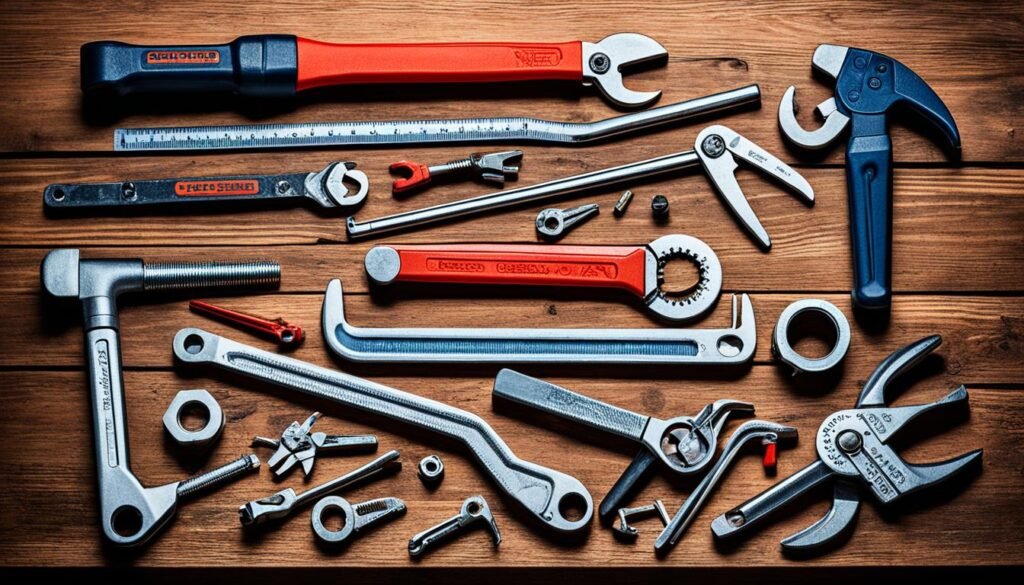
To do plumbing jobs, you need the right tools. Here are a few you can’t do without:

  • Pipe wrenches to tighten and loosen pipe fittings
  • Basin wrenches for working on faucets and sink fixtures
  • Plungers to clear clogged drains
  • Drain snakes or augers to remove stubborn blockages
  • Teflon tape to create watertight seals on threaded connections

Knowing how and when to use these tools is key. It can turn a hard job into an easy one.

Fixing Common Plumbing Issues

Clogged drains are a big issue for many. Rather than using harsh chemicals, start with a mix of baking soda and vinegar. It’s greener and won’t hurt your pipes.

A running toilet is another problem that wastes water. Fixing it is about adjusting some parts inside. This can stop the water from flowing when it shouldn’t.

Finding and stopping water leaks is very important. They can cause a lot of damage. Watch for signs like noise, wet spots, or stains. Always turn off the water before you start fixing a leak.

Working on plumbing by yourself is a great skill to have. But, some jobs are better left to the experts. If you’re not sure or if the problem seems big, call a pro. They know how to handle tough plumbing issues.

Plumbing Tools

Understanding the basics of plumbing can help you save money and keep your home safe. With the right tools and some knowledge, you can fix a lot of plumbing issues. But, always know when to ask for help.

Maintaining Your Plumbing System

Keeping your plumbing in top shape is key for your home’s health. This includes everything from fixing leaks to preparing your pipes for winter. Doing a little work early can help your plumbing last longer and work better. We’ll look at tips to keep everything running smoothly.

Leak Detection and Prevention

Looking for and stopping leaks is a big part of plumbing care. Even small leaks can waste a lot of water and cause damage. It’s smart to check pipes, toilets, sinks, and appliances every week for leaks. A water leak detector can also be very helpful. It warns you about problems fast, helping to stop bigger issues.

Drain Cleaning and Clog Prevention

Clogged drains are a headache, but you can prevent them. Try using a mix of baking soda and vinegar to kill clogs naturally. It works as well as common chemical cleaners but is better for the planet. If a clog is tough, a drain auger can help.

Water Heater Maintenance

The water heater is key and needs regular care. Make sure to clean out the tank and check the safety valve. These steps help it last longer and work better.

Winterizing Plumbing

Before it gets too cold, prepare your plumbing for winter. This means insulating pipes, turning off outdoor water, and draining systems. It keeps pipes from freezing and causing problems.

Follow these tips to keep your plumbing healthy. This can save you a lot of trouble, money, and time. Remember, you can do some easy fixes yourself. But if things get tough or you need big changes, call a plumber.

Conclusion

Every homeowner should understand their home’s plumbing. You need to know about the water supply, drains, and the right tools. This helps you fix small issues and avoid big repair bills. With a bit of knowledge, you can keep your plumbing working smoothly and prevent costly problems.

It’s important to keep up with plumbing care. Fix leaks right away and use green plumbing products to save money and water. Also, know the rules for safe plumbing and stay away from common DIY mistakes. This will keep your plumbing safe and efficient.

Learning about your plumbing is useful for all homeowners. It puts you in charge of your home’s upkeep and helps you make smart choices about plumbing work. By being proactive, you can enjoy a trouble-free plumbing system in your home for many years.

FAQ

What are the three primary systems that make up a home’s plumbing?

The main systems of a home’s plumbing are water supply, heating, and drainage. Each handles different but important jobs.

How does the drainage system work?

The drainage works using gravity. It moves wastewater out of your home. This happens either to a public system or a septic field.

What are some essential plumbing tools and techniques every DIY-minded homeowner should know?

DIY homeowners should learn about pipe work, finding leaks, and fixing faucets. They should also know how to clean drains. It’s important to understand plumbing rules and staying safe.

Why is proper maintenance important for a home’s plumbing system?

Good upkeep is crucial for your plumbing. It includes caring for the water heater and preparing pipes for winter. This keeps everything running smoothly.

Source Links

The Color Guidelines for Decorating

Color Guidelines for Decorating

The 60-30-10 rule is key in interior decorating. This rule says to use 60% main color, 30% secondary color, and 10% accent color. It ensures balance and harmony in your designs and highlights the importance of color choice.

There are more rules and schemes than just 60-30-10. You can use analogous colors (neighbors on the wheel) or complementary colors (opposites) for different effects. Monochromatic schemes focus on shades of one color. Even a 110% option exists for those wanting more color. It includes two accent colors alongside the 60-30-10 model.

Key Takeaways

  • The 60-30-10 rule guides color distribution for pleasing spaces.
  • Color scheme choices, such as analogous or complementary, set different vibes.
  • Understanding color theory is crucial for good design.
  • Start with neutrals and add bright colors to liven up a room.
  • Personal style and alternative approaches can lead to attractive spaces.

Understanding the Color Wheel

The color wheel is key to understanding color theory in interior design. It includes 12 hues, mixing three primary, three secondary, and six tertiary colors. Knowing how these colors mix helps in creating beautiful color schemes for your home.

Primary Colors: Red, Blue, and Yellow

Primary colors are the basis of the color wheel. They are red, blue, and yellow. You can’t make these colors by mixing any others. Every other color comes from them.

Primary Colors

When you mix two primaries, you get the secondary colors: orange, green, and purple. Mix red and yellow to get orange. Mix blue and yellow to get green, and blue and red to make purple.

Then, you have the tertiary colors. These mix a primary with an adjacent secondary. The six tertiary colors are red-orange, yellow-orange, yellow-green, blue-green, blue-violet, and red-violet.

Primary ColorsSecondary ColorsTertiary Colors
Red, Blue, YellowOrange, Green, PurpleRed-Orange, Yellow-Orange, Yellow-Green, Blue-Green, Blue-Violet, Red-Violet

It’s vital to know how primary, secondary, and tertiary colors work together. This knowledge is essential for making your design projects look great and feel balanced.

Secondary Colors: Orange, Green, and Purple

On the color wheel, orange, green, and purple are known as secondary colors. They come from mixing two primary colors. These colors look great with primary ones. They’re also used to make tertiary colors more complex.

Colors next to each other on the wheel create a smooth and calming look. Complementary colors like orange and blue, or red and green, bring energy. Designers often use secondary colors to brighten up a room’s color mix.

Did you know, up to 90% of how we feel about a product can be just the color? The main colors are red, blue, and yellow. Next come secondary shades like orange and purple. Then there are mixtures like magenta or teal.

Secondary Colors

Warm colors make us feel lively and creative. Cool tones, on the other hand, bring tranquility. UI designers like the RGB model for screens. But CMYK, for printing, is better with more varied colors.

Now, there are more color options than ever before. We aren’t limited to just eight like in the past. Secondary colors are key for a good mix in both design and art.

Tertiary Colors: Combining Primary and Secondary Hues

In the color world, tertiary colors are key. They help make palettes stunningly beautiful. These colors come to life when mixing a primary color with a neighboring secondary on the wheel. For example, red-orange, yellow-green, and blue-violet are all tertiary colors.

Tertiary colors connect primary and secondary ones. They give designers more choices for a look that’s both subtle and engaging. Designers can blend these colors for a peaceful analogous color scheme. Or they can use them with complementary colors for a brighter, more dynamic look.

Knowing how to work with tertiary colors is vital in decorating spaces. They let designers add depth and excitement to colors. With these intermediate colors, a design can be both harmonious and eye-catching.

Designing a cozy room or a striking area? Knowing about Tertiary Colors, Color Combinations, and Color Theory is a must. It’s a skill all designers and color fans should have.

Color Guidelines for Decorating

Choosing the right color palette is key in interior design. It sets a mood and brings your space together. The 60-30-10 rule is a great guide. It advises using a main color for 60% of the room, another for 30%, and a bright accent for the last 10%. This method creates balance and interesting contrasts in your decor.

Designers often mix up the 60-30-10 rule. They might try a 70-20-10 or 50-30-20 split. It all depends on what look they’re going for. Knowing how the color wheel works helps. They pick colors that work well together, like shades close to each other or those directly across.

To get a look that flows well, think about what’s already in your room. Your furniture, art, and the structure of the space matter. Including them in your color plan helps make everything feel connected. Color tools online, like Coolors and Canva, can also be super helpful.

Warm and cool tones can work beautifully together. A mix of both adds layers to your design. Start with a neutral as your key color. Then, add warmer or cooler shades for depth. Playing with different color proportions helps you keep things interesting.

The 60-30-10 rule is just a tip. Feel free to change it to suit your style. Let your imagination loose when picking colors for your home.

Monochromatic Color Schemes

Monochromatic color schemes are perfect for a calm, unified space. They dive deep into one color, showing off different Tints, Shades, and Tones. This variety makes a room both striking and peaceful. It’s all about using Color Variations to make your space feel just right.

Variations Within a Single Hue

To make a monochromatic scheme work, designers use shades and tints well. They pick a main color and then mix in lighter or darker tones. This method brings life and balance to the room. It shows off what that color can really do.

Adding different textures and materials makes a monochromatic room even more interesting. Mixing smooth and rough materials, like wood and soft fabric, adds layers. It keeps the room from feeling too flat.

True designers love monochromatic schemes for their clarity and flow. They let the room’s structure and decor stand out without color clashes. It’s a clean canvas that highlights every corner beautifully.

Monochromatic design works for every color, from bold to soft. It’s a classic choice for any room. By playing with different tones of one color, designers bring balance, charm, and style into their spaces.

The Psychology of Color

Colors deeply affect how we feel and the vibe of a room. It’s key to know what emotions each color can provoke. This helps when you’re decorating or painting your place. You want to pick colors that will make people feel the way you intend.

Reds, oranges, and yellows bring a sense of life and energy. They can lift spirits and make a space feel vibrant. Meanwhile, blues, greens, and violets are calming. They make you feel peaceful and relaxed.

Greens remind us of nature and bring calm. Yellows are cheery and lively. Bold reds show passion and courage. While soft pinks feel gentle and sweet. When you’re picking colors for a room, think about the mood you want to create.

It’s a good idea to mix warm and cool colors for balance. This mix can make a space look welcoming. It also meets the different feelings people might want in that area.

“Colors have the power to evoke specific emotional responses and create different moods within a space.”

Knowing about Color Psychology, Emotional Responses, and Mood helps a lot. Whether it’s Warm Colors or Cool Colors, making smart choices is important. This way, you decorate your place to achieve the mood you desire.

Conclusion

Knowing color theory is key to making beautiful and balanced interior design. You’ll understand which colors go well together by using the color wheel. This knowledge lets designers and homeowners pick the right colors for their rooms. It also helps create a certain mood or feel in a space.

By following color guidelines and trying different things, you can improve your home’s look. Learning about color schemes and their meanings lets you design wisely. This way, you can make rooms that look good and help guests feel a certain way.

Mastering color theory in interior design is exciting and can truly change your space. Mix and match colors, experiment, and let your style stand out. This way, you’ll make spaces that are uniquely you and that you enjoy.

FAQ

What is the color wheel and how can it help with decorating?

The color wheel helps in picking paint colors. It shows which colors look good together. The wheel has 12 main hues and many mixtures of these colors. Knowing the color wheel helps choose the best colors for your space.

What are the primary, secondary, and tertiary colors on the color wheel?

Red, blue, and yellow are the primary colors. They can’t be made by mixing others. Mixing two primaries gives you orange, green, and purple, the secondary colors. Tertiary colors come from mixing a primary with a secondary next to it. Examples are red-orange, yellow-green, and blue-violet.

How can I use the 60-30-10 color rule in interior design?

The 60-30-10 rule suggests using colors in this way: 60% main color, 30% secondary color, and 10% accent color. It’s a simple way to make your room’s colors work well together. You can modify the rule to fit your style and still achieve harmony.

What are the benefits of a monochromatic color scheme?

A monochromatic scheme uses shades of one hue to make a room look together. It creates a peaceful atmosphere. Exploring different tones of a color can add depth. Mixing in textures and materials keeps it interesting without losing the calm feel.

How do warm and cool colors affect the mood of a room?

Warm colors bring energy and optimism to a room. They include red, orange, and yellow. On the other hand, cool colors make a space feel peaceful and relaxed. These are colors like blue, green, and violet. It’s key to choose colors based on the mood you want to create.

Source Links

Understanding What Counts as a Kitchen Appliance

Kitchen Appliance Definition

Home appliances are key in the kitchen for chores like cooking, cleaning, and storing food. The term “home appliances” covers many machines that help out in the house. This includes things like fridges, washers, toasters, and coffee makers. Starting in the early 20th century in the U.S., these electric and gas-powered gadgets came about due to fewer full-time servants and the need to cut down on housework. Since then, the variety and use of these appliances has grown a lot, making them kitchen essentials around the world.

Key Takeaways

  • Home appliances include a wide range of electrical devices used for various household tasks, from cooking and cleaning to food preservation.
  • The development of self-contained electric and gas-powered appliances in the early 20th century was driven by the decline of full-time domestic servants and the desire to reduce household chores.
  • The home appliance industry has grown significantly over time, with major and small appliances becoming essential in modern kitchens.
  • Kitchen appliances can include refrigerators, washing machines, cookers, dishwashers, microwaves, coffee makers, and a variety of other specialized and convenience appliances.
  • Proper understanding and categorization of kitchen appliances are crucial for effective kitchen design and organization.

The Evolution of Modern Kitchen Appliances

Kitchen appliances have changed a lot over the years. New technology has made cooking easier and more fun. We’ve gone from simple fires to fridges that you can talk to. This journey has been really interesting.

Refrigerators with Voice-Activated UI and Integrated Operating Systems

Refrigerators that can talk back are a big deal. They let you do things like order food without lifting a finger. Now, the kitchen is a place where tech and ease come together. You can tell your fridge what to do and it’ll listen.

Innovative Gadgets Becoming Essential Kitchen Appliances

Now, we have cool gadgets that every cook must have. Things like blenders and air fryers are a game-changer. They make cooking more creative and save a lot of time. These tools are key for anyone who loves making food at home.

Kitchen tech has come a long way. It’s always getting better with new, smart features. This means our kitchens are now full of tech and devices that help us cook better. With these tools, creating amazing meals at home has never been easier.

kitchen appliances

“The kitchen is the heart of the home, and the evolution of kitchen appliances has transformed the way we cook, entertain, and live.” – Chef Julia Child

Essential Kitchen Appliances

Modern kitchens need a few key appliances to work well. The fridge and freezer are the most important. They do the most to keep your food fresh and ready to use.

Refrigerator: The Hub of the Kitchen

The fridge is like the heart of your kitchen. It makes sure your food stays fresh. You can keep everything from veggies to meat in it.

Having a fridge lets you store lots of different foods. This means you can be more creative when you cook. It makes it easy to prepare your meals too.

Freezer: For Long-Term Food Preservation

The freezer is perfect for keeping food for a long time. It keeps everything at a very cold temperature. You can store meat, veggies, and fruits in it. They’ll stay fresh until you’re ready to use them.

With a freezer, you can stock up on food. This helps you plan meals ahead. It also makes cooking more efficient, using all your kitchen tools and gadgets well.

Kitchen Appliances

“The refrigerator and freezer work hand-in-hand to create a well-equipped and efficient kitchen, empowering home chefs to explore their culinary passions with ease.”

Laundry Appliances Commonly Found in Kitchens

Laundry appliances like washing machines and tumble dryers are now common in kitchens. They have become essential, adding convenience to our homes. They fit in well with the kitchen space, making chores easier.

Washing Machine: A Staple in Every Household

Every home has a washing machine to keep clothes clean. They come with different wash cycles to suit various fabrics. This makes keeping our clothes fresh a lot easier. Washing machines have greatly improved life at home. They handle all our laundry needs efficiently, from light to heavy loads.

Tumble Dryer: Convenient Clothing Drying Solution

Tumble dryers are a great match for washing machines. They dry clothes fast, even when nature doesn’t help. Tumble dryers have various settings to dry clothes just the way you like. So, they complete the laundry process without hassle and save us time.

Washing machines and tumble dryers are now key parts of kitchens. They make our homes more functional and keep our clothes clean. With their many features, they have changed how we do laundry. Now, we enjoy a tidy home without much effort.

Wash CyclePercentage of UseAverage Duration (minutes)Frequency of Use (times per week)
Normal50%603
Quick/Speed Wash25%302
Heavy-duty15%901
Permanent Press7%451
Delicates3%401

Most people use the normal wash cycle more often, about half the time. The quick/speed wash is next in popularity, used a quarter of the time. The heavy-duty setting for tough dirt sees frequent use at 15%. There’s also the permanent press and delicates cycles that handle special fabrics, each used about 1 in 10 times.

Wash cycles take different amounts of time. Normal washes last about an hour, quick washes are done in half that, and heavy-duty cycles take an hour and a half. For less frequent use, there are the permanent press at 45 minutes and delicates at 40 minutes. Most load up the normal wash about 3 times weekly and follow up with quick washes twice in the same period. The rest are used just once over seven days.

Putting laundry appliances in the kitchen is more popular these days. It makes washing and drying clothes simpler and faster. These appliances not only help in the kitchen but also add to a home’s comfort and beauty.

Kitchen Appliance Definition

Creating the perfect kitchen starts with knowing what a kitchen appliance is. A kitchen appliance is any tool or machine that helps with home tasks, mainly in the kitchen. You’ll find these devices in every cooking area. They include everything from big items like refrigerators to smaller ones like blenders. Their goal is to make things simpler, from saving food to cooking to cleanup.

The term kitchen appliance covers many Culinary Tools and Kitchen Gadgets. They can be anything from Countertop Appliances to Household Appliances. These tools can be powered differently, like by electricity, gas, or special methods like induction. Without them, our kitchens would not be the same. They help us cook and clean better and faster.

Appliance TypeDefinition
Automatic AppliancesAppliances that operate without the need for constant human intervention, such as self-cleaning ovens and programmable coffee makers.
Built-in AppliancesAppliances that are designed to be installed within cabinetry or other permanent structures, like wall ovens and integrated dishwashers.
Cord-Connected AppliancesAppliances that are powered by a detachable cord, allowing for flexibility in placement and usage, such as stand mixers and blenders.
Permanently Connected AppliancesAppliances that are wired directly to the electrical system, designed for permanent installation, like built-in cooktops and wall ovens.

Are you improving your kitchen or making a new home? Knowing about kitchen appliances is key. When you learn about the latest kitchen tech, you can choose wisely. This not only makes your kitchen amazing but also makes cooking and cleaning easier and more fun.

The Versatile Cooker and Dishwasher

In any kitchen, the cooker and dishwasher are key. They are Kitchen Appliance Definition and Cooking Appliances. They transform how we cook and clean after eating.

Cooker: The Key to Any Home Cooking

The cooker is essential in Kitchen Gadgets and Countertop Appliances. It cooks in so many ways, like roasting and grilling. Culinary Tools like it help make tasty meals, from juicy steaks to soft cakes.

It can be gas or electric but is always helpful. Every home chef needs one to create delightful dishes.

Dishwasher: Keeping Homes Clean and Healthy

The dishwasher is vital for a clean kitchen. It washes dishes to keep them hygienic. And it cleans well without using a lot of chemicals.

It saves time and makes your living space healthier. Features like adjustable racks and eco-friendly cycles are very helpful.

“The cooker and dishwasher are the unsung heroes of the modern kitchen, seamlessly blending Cooking Appliances and cleaning capabilities to create a harmonious culinary experience.”

If you cook a lot or just want an efficient kitchen, a cooker and dishwasher are a must. They work hard to keep your Household Appliances and Home Appliances clean. These Culinary Tools are essential for any //plumbersinhemetca.com/ and Dream Home Digest.

Small but Mighty Kitchen Appliances

Major kitchen appliances are key, but don’t overlook small ones. They are crucial in the modern kitchen. These little gadgets may be small, but they make a big difference. They help make daily cooking and chores easier.

Microwave: Convenient and Versatile

The microwave oven is a must-have in many homes today. It’s good at reheating food, defrosting frozen items, and even cooking. With its quick abilities, it makes cooking faster and more straightforward.

It’s perfect for heating snacks or making entire meals. This makes the microwave a top choice for many cooks.

Kettle: Boiling Water Made Easy

The electric kettle is key to modern cooking. It boils water fast, making preparing tea, coffee, or instant meals quick.

Some kettles have special features like temperature control and auto shut-off. These make making hot drinks not just convenient but also safe.

Toaster: Perfect for Quick Breakfast

The toaster is amazing for quick breakfasts. It can toast bread, bagels, or English muffins perfectly. You can adjust the settings to get your preferred toasting level.

For a stylish and compact toaster, the Kenmore range is worth checking out. They fit well in any kitchen.

These small gadgets are fundamental for the modern kitchen. From microwaves to kettles and toasters, they make daily tasks easier. They enhance the kitchen experience for everyone.

Conclusion

Kitchen appliances, big and small, have come a long way over the years. They make our lives easier, more efficient, and offer many options for cooking. Every appliance, from the toaster to the fridge, helps with making meals, keeping food fresh, and doing the laundry. And, as tech gets better, these tools will do more to improve your kitchen and home.

No matter how big or advanced, kitchen gadgets are key to any home. They help us cook and offer many uses. As the appliance industry grows, we’ll see more smarter and integrated tools for the kitchen. This progress will change how we cook and take care of our homes in the future.

FAQ

What is considered a kitchen appliance?

A kitchen appliance helps with tasks in the kitchen. It can cook, clean, and preserve food. These devices make managing meals easier.

What are some examples of major kitchen appliances?

Refrigerators, cookers, and dishwashers are major appliances. They are key in the kitchen for cooking and cleaning. These devices are big helpers in every kitchen.

What are some examples of small kitchen appliances?

Microwaves, electric kettles, and toasters are small appliances. They are smaller but vital for kitchen convenience. They help with many daily tasks.

How have kitchen appliances evolved over time?

Kitchen devices have come a long way. Now they have new tech like voice control and smart systems. These make cooking better and easier.

Where are laundry appliances commonly found in the home?

Laundry machines are often in or near kitchens. They add to the home’s ease and functionality. This close location makes managing chores simpler.

Source Links